Reading notes: Psychology of Money, Deep Work and two more
What I took away from The Psychology of Money, a second read of Deep Work, a Mark Manson passage on victimhood chic, and my weekend pick, Ego is the Enemy.
 Jatin Kumar Malik First published on
 X
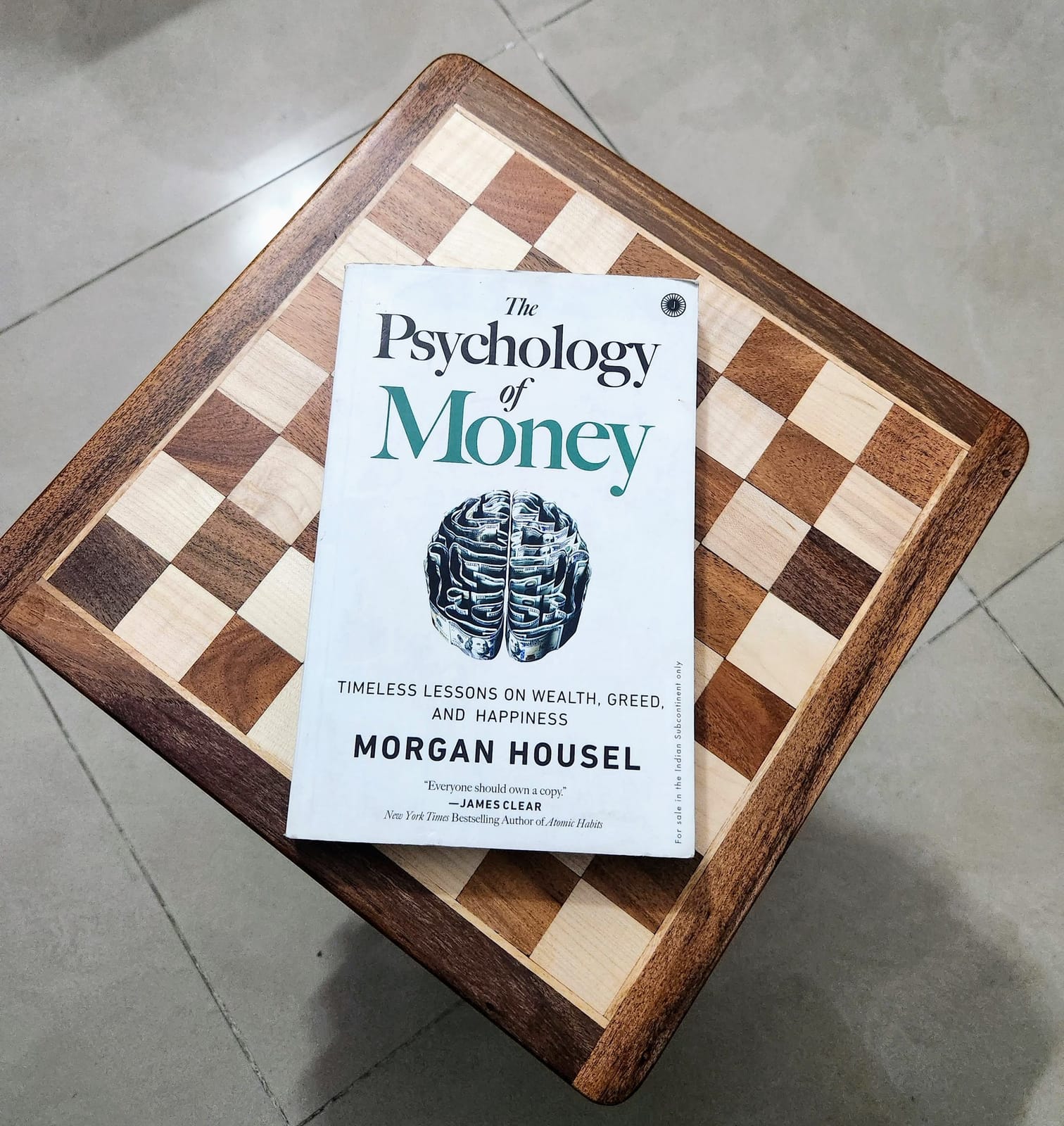
This week turned into a proper reading week! 📚 Finished “The Psychology of Money”, wrapped up my second read of “Deep Work”, tweeted one passage I’d highlighted in “The Subtle Art of Not Giving a F*ck”, and picked up “Ego is the Enemy” for the weekend.
I’ve been posting notes on Twitter as I go. The longest one was a thread on The Psychology of Money. This post puts all four in one place, with a bit more room than 280 characters.
The Psychology of Money by Morgan Housel
I’d recommend this one even if finance isn’t really your thing & you usually stick to passive avenues. The book is about the psychology behind money decisions, and how our emotions and cognitive biases push us into choices that make zero sense on paper. Being overconfident that we can predict future financial events is one example.
Behaviour beats intelligence
Doing well with money has a little to do with how smart you are and a lot to do with how you behave. And behaviour is hard to teach, even to really smart people. A genius who can’t keep his emotions in check can still blow himself up financially.
It works the other way round too. Ordinary folks with no financial education can end up wealthy if they have a handful of good habits, none of which would show up on an IQ test.
Morgan also points out that black swans will happen whether you know about them or not.
Start early & let compounding do the heavy lifting
My takeaway here was simple: start saving and investing as early as you can. Pick a couple of low-cost index funds, put a small amount in every month (basically a SIP), bump up the contribution as your income grows, and then just leave it alone for years.
Morgan thinks a lot of disappointing trades and bad strategies come down to not understanding compounding. The stat that got me was this one: $81.5 billion of Warren Buffett’s $84.5 billion net worth came after his 65th birthday. 🤯
This is pretty much what I do myself. I started SIPs in index funds early in my career, sometime before 2018, and I’ve stepped up the amount over the years. I’ll skip the numbers. 😉
Looking rich vs being wealthy
Plenty of people want to look rich. Far fewer want to be wealthy, and those are very different things. As Morgan puts it, you can look rich and still be poorer than the homeless guy down the street. Once you know that, is looking rich even worth chasing?
Stop moving the goalposts
Morgan calls this the hardest skill and the most important one. If your expectations go up every time your results do, there’s no point striving for more. It gets dangerous when more money or more power pushes your ambition up faster than your satisfaction.
Money buys control over your time
The highest dividend money pays is control over your time, so you can do what you want, when you want, with who you want. It can’t buy you happiness or health. And most of us live like we have unlimited time, right up until we don’t.
My favourite line from the book, which I also closed the thread with:
“Saving is the difference between your ego and your income.” (Morgan Housel)
Deep Work by Cal Newport, second read
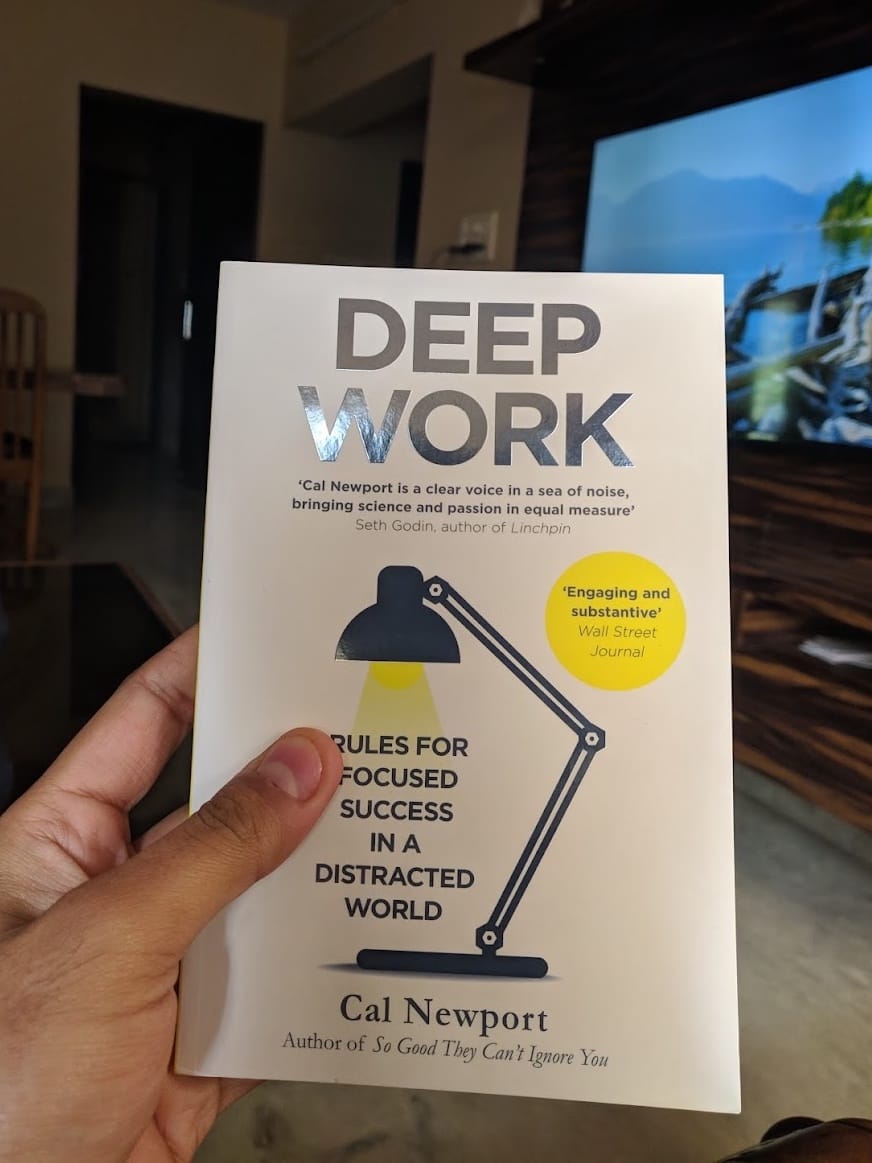
A couple of days before finishing Housel, I wrapped up my second read of Deep Work. Newport defines deep work as the ability to focus without distraction on a cognitively demanding task. He argues it’s getting rarer just as the economy values it more, and that you need it to do well in a lot of fields.
A good chunk of the book is about what gets in the way, mainly social media and being connected all the time. Then it gets practical, with tips on planning your day, cutting out distractions and getting into a deep work mindset. He says the payoff is better productivity, more creative work and more fulfilment, and links that to building a good career and hitting your goals. There’s also some interesting stuff on what deep work does to your brain, psychologically and neurologically.
If you want to focus better at work, it’s worth reading. I’ve read it twice now! Of the practical stuff, the two habits I actually stick to are time blocking and no-meeting mornings.
The Subtle Art of Not Giving a F*ck by Mark Manson
I only tweeted about one passage from this, which I’d highlighted on my Kindle. Manson calls it “victimhood chic”. Feeling wronged has become fashionable, because publicly sharing an injustice gets more attention and sympathy on social media than most other things. The bit I highlighted says it’s in style on the right and the left, among the rich and the poor alike. Interesting perspective, and it explains the current state of the world quite well.
Ego is the Enemy by Ryan Holiday
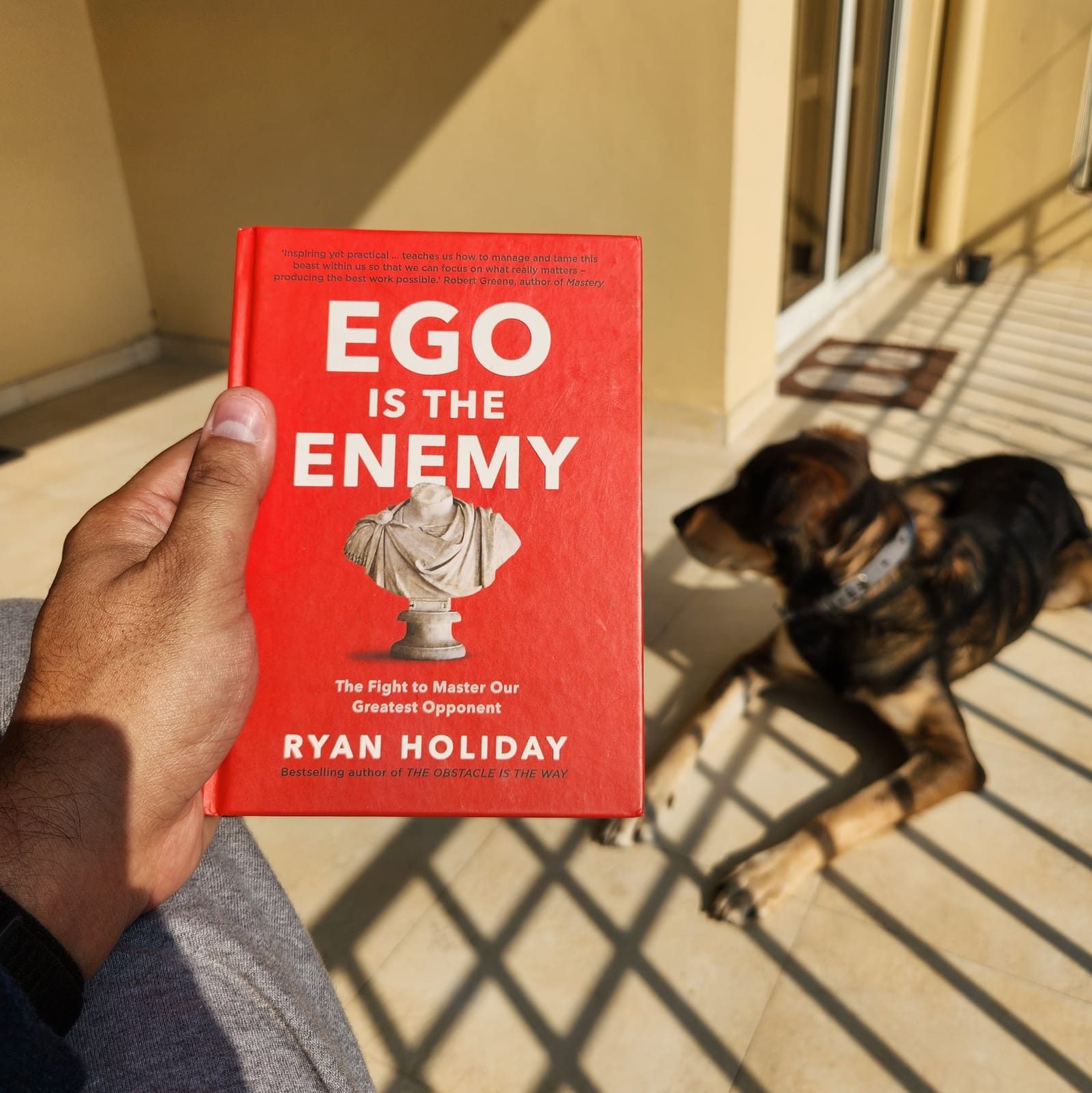
This is my weekend pick. Kylo, my dog, approves. 🐶 You can tell from how hard he’s pretending not to care in the photo.
How I fit the reading in
I block 15 to 30 minutes every day before I start work, and try to read at least 15 pages.
Keep reading
The engineering books I'd read first, and how I actually get through them
A Blind post listed 9 books for a >600K/yr engineering job. I've read 8 of them. Here are the ones I'd read first, and the habits that get me through books.
Reading Petzold's CODE as a book club, one Saturday at a time
Six months of Saturday sessions reading Petzold's CODE together, from flashlights and Morse code to operating systems. Over 120 started. 4 of us finished.
Job hunt 4.0: five weeks of senior and staff interviews, and what I got wrong
An offer pulled in the crypto winter, a warm-up in November 2021, about 40 companies in one Obsidian note, and my notes on every round I fumbled.
Leave a comment