How to Live a Life of Honor? An XKCD inspired guide for Software Engineers!
Five heavily opinionated, xkcd-illustrated principles for practising honor in your daily work as a software engineer, from my last 12 years in the industry.

Living a life of honor as a software engineer isn’t about grand gestures, it’s about consistency in small choices. By focusing on your craft, nurturing peaceful collaboration, committing to growth, guarding your integrity, and mastering communication, you’ll not only build great software but also inspire trust and respect in your peers.
In doing so, you leave the world a better place-one line of code, one act of kindness, and one disciplined day at a time.
In the fast-paced world of software development where deadlines loom, priorities shift, and egos can run high-living a life of honor is both a compass and a shield. It’s about more than writing clean code, it’s about cultivating a character that elevates your team, your product, and ultimately, the world.
Here’s my heavily opinionated view on how you can practice honor in your daily work as a software engineer based on last 12 years in this industry:
1. Focus on Your Work, Let Results Speak!
- Dedicate yourself fully to each task. Minimize distractions and commit to deep focus.
- Measure your impact by outcomes such as features shipped, bugs resolved, performance improved rather than by self-promotion.
- Trust that consistent, quality contributions will be recognized naturally.
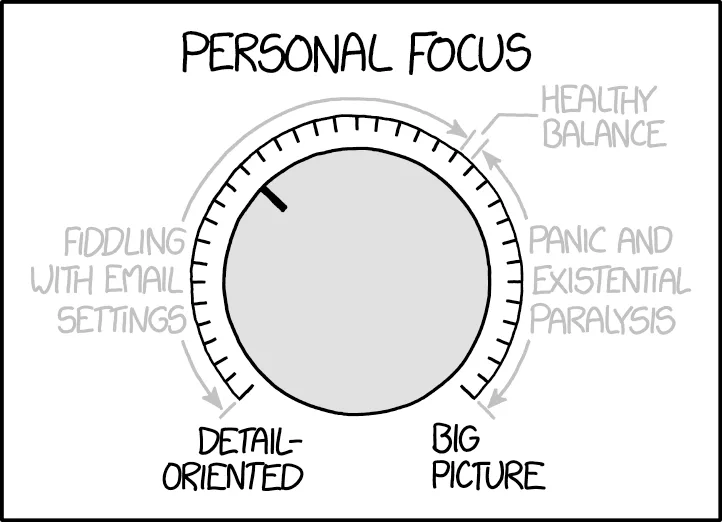
2. Build Peace, Avoid Arguments, Solve Problems!

- Foster a collaborative environment. When disagreements arise, assume good intent and seek to understand before responding.
- De-escalate conflicts by reframing challenges as shared problems to solve together.
- Steer clear of toxic politics and office alliances. Your reputation thrives on fairness, not favoritism.
3. Commit to Continuous Improvement!
- Adopt the “kaizen” mindset: small, daily improvements compound into mastery. Learn a new framework, refine your algorithms, or optimize your workflow every week.
- Set personal growth goals: public speaking at a local meetup, contributing to an open-source project, or mentoring a junior engineer.
- Regularly reflect on your progress. Celebrate wins, analyze setbacks, and adjust course.
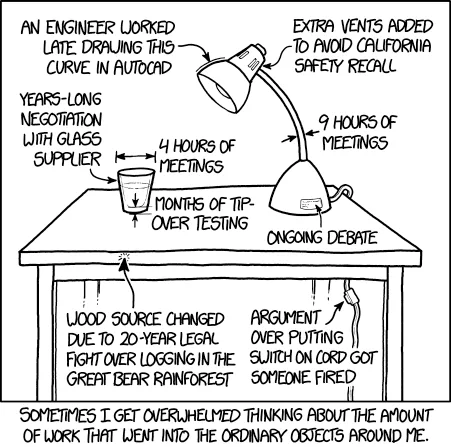
4. Uphold Integrity and Do Good!

- Honor your commitments. If you promise a timeline or a code review, deliver it or communicate proactively if circumstances change.
- Protect sensitive data, respect privacy, and adhere to security best practices-even when no one is watching.
- Use your skills for good: volunteer to build tools for nonprofits, contribute to accessibility initiatives, or share knowledge through workshops.
5. Master Communication and Time!
- Speak Less, Listen More: In stand-ups or design reviews, ask clarifying questions and genuinely absorb feedback before offering opinions.
- Avoid Gossip and Idle Talk: Channel water-cooler energy into productive brainstorming or helping colleagues overcome blockers.
- Respect Time, Yours and Theirs: Be punctual, concise, and mindful of everyone’s calendar. Prepare agendas for meetings and end them early if objectives are met.

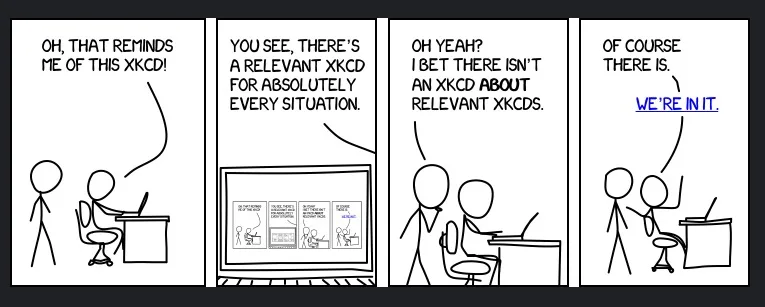
Comics: xkcd by Randall Munroe, used under CC BY-NC 2.5. The last one is a fan-made, xkcd-style strip.
Keep reading

From the audience to the stage: how a backend engineer learnt to give talks
In 2019 I was in the audience at Bengaluru meetups. Since then I've given talks in Bengaluru, Delhi, Goa, Pilani and Chicago. Here's every one, in order.

The engineering books I'd read first, and how I actually get through them
A Blind post listed 9 books for a >600K/yr engineering job. I've read 8 of them. Here are the ones I'd read first, and the habits that get me through books.
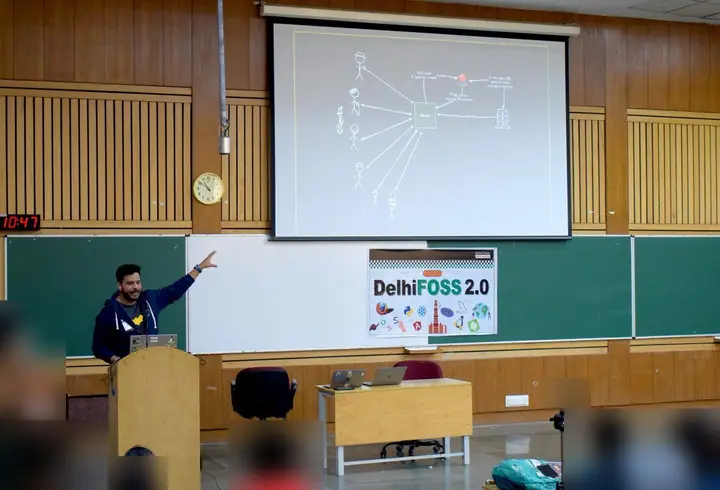
The Redis Paradox: my DelhiFOSS 2.0 talk at IIT Delhi, written up
The written version of my DelhiFOSS 2.0 talk on Redis beyond caching: a short history of caches, live driver matching with GEO commands, and Pub/Sub.
Comments
No comments yet. Start the conversation.
Comments couldn't load right now.