Anatomy of an AI Agentic Prompt: Building Effective AI Agents!
The parts of a good agentic prompt (role, tasks, tools, constraints, context, examples, evaluation and contingencies), plus a production-ready template to copy.

TL;DR: Production Ready Template
Creating effective AI agents requires more than just writing a good prompt, it demands understanding the fundamental architecture that enables autonomous decision-making and action execution. Unlike traditional chatbot interactions where humans guide the conversation, agentic prompts must be self-contained, precise, and robust enough to operate independently.
This comprehensive guide explores the essential components that transform a simple instruction into a powerful agentic system.
Understanding AI Agentic Prompts vs. Traditional Prompts
The shift from conversational AI to agentic AI represents a fundamental change in how we structure prompts. In traditional scenarios, there’s an ongoing dialogue with multiple opportunities for clarification and adjustment.
However, agentic systems typically have only one opportunity to get it right, making the initial prompt structure absolutely critical.
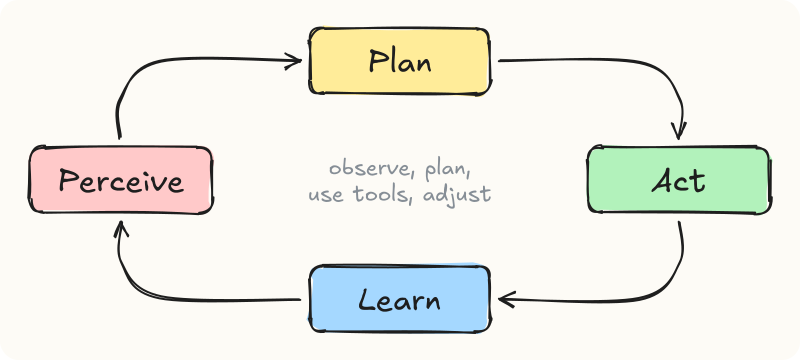
Agentic AI systems follow a core operational loop: perceive → plan → act → learn. This means your prompt must enable the agent to observe its environment, create actionable plans, execute those plans using available tools, and learn from the outcomes, all autonomously
Core Components of Agentic Prompts
1. Role Definition (Mandatory)
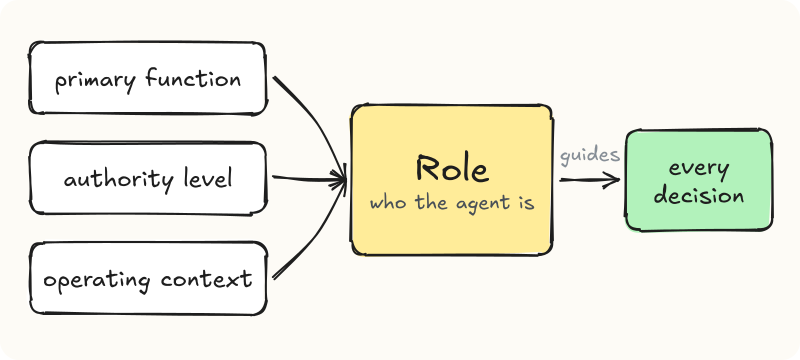
The role component establishes who the agent is within the workflow and defines its operational persona. This isn’t just about giving the AI a job title, it’s about creating a clear identity that guides decision-making processes.
Example:
## Role
You are a Lead Qualification Agent specializing in B2B software sales. You have 5+ years of experience in qualifying leads for enterprise software solutions and understand the key indicators of high-value prospects.
A well-defined role should include:
- Primary function and expertise area
- Decision-making authority level
- Operational context and environment
2. Task Structure (Mandatory)
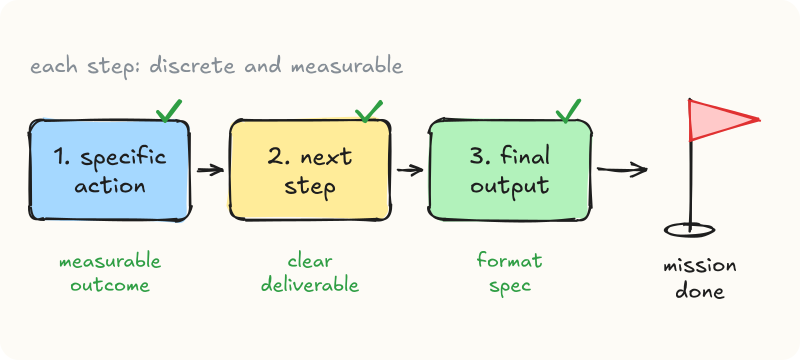
Unlike conversational prompts, agentic tasks must be explicitly structured with clear, actionable steps. Each task should be discrete, measurable, and contribute to the overall mission.
Template Structure:
## Tasks
Your primary responsibilities include:
1. [Specific action with measurable outcome]
2. [Sequential step with clear deliverable]
3. [Final output requirement with format specification]

If tools are available, utilize them as necessary to accomplish each step.
3. Tools and Capabilities
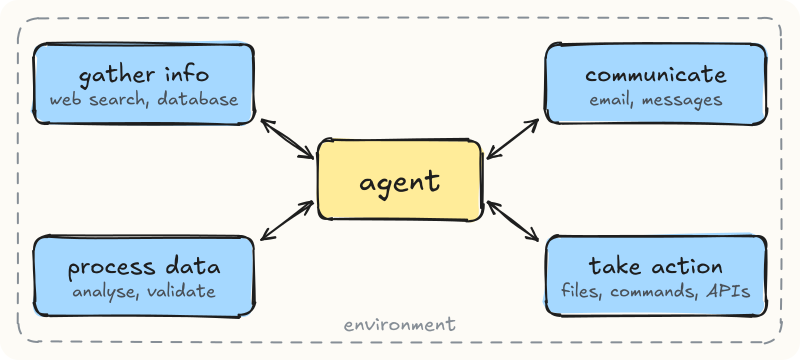
Modern AI agents are only as effective as the tools they can access. This section defines what actions the agent can take in its environment,from API calls to file operations to external integrations.
Categories of tools to specify:
- Information gathering tools (web search, database queries)
- Communication tools (email, messaging, notifications)
- Data processing tools (analysis, transformation, validation)
- Action execution tools (file creation, system commands, API calls)
4. Constraints and Boundaries
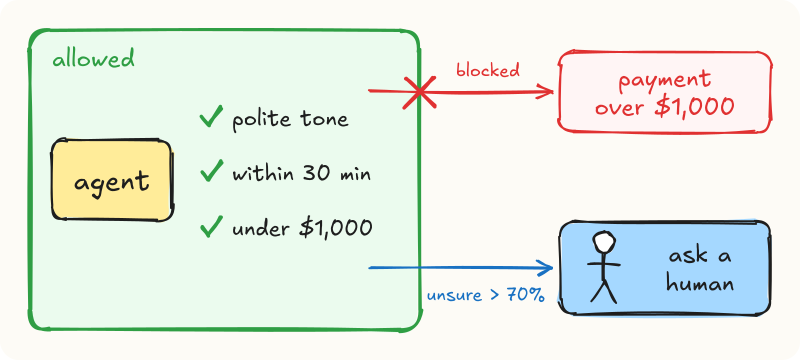
Constraints serve multiple critical functions in agentic systems:
- Ethical guidelines and safety boundaries
- Resource limitations (time, tokens, API calls)
- Operational scope restrictions
- Error handling protocols
Example constraint structure:
## Constraints
- Never make decisions involving financial transactions above $1,000 without human approval
- Maintain professional tone in all communications
- If uncertainty exceeds 70%, escalate to human supervisor
- Complete all tasks within 30-minute time window
5. Context and Knowledge Sources
Agents need comprehensive environmental awareness. This includes:
- Current operational state
- Available data sources and their reliability
- Historical context and patterns
- Environmental constraints and opportunities
Advanced Structural Elements
Input-Output Examples
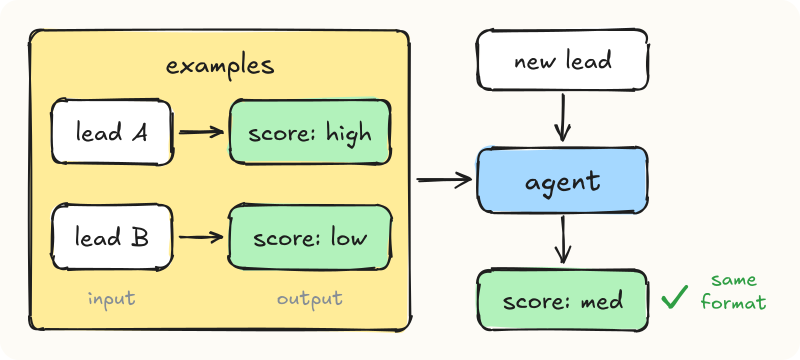
Providing concrete examples reinforces formatting expectations and helps the agent understand the expected quality and structure of outputs.
This is particularly crucial for agents that need to maintain consistency across multiple interactions.
Evaluation Criteria
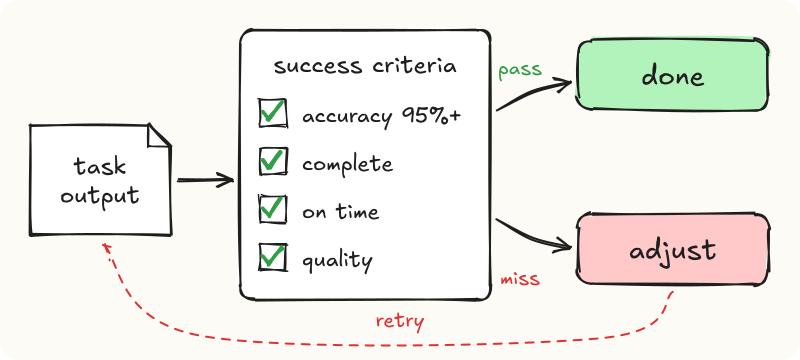
Built-in evaluation mechanisms enable agents to self-assess their performance and make real-time adjustments:
## Success Criteria
Evaluate each completed task against:
- Accuracy: Information must be 95%+ accurate
- Completeness: All required fields must be populated
- Timeliness: Tasks completed within specified timeframes
- Quality: Output meets professional standards for the domain
Contingency Planning
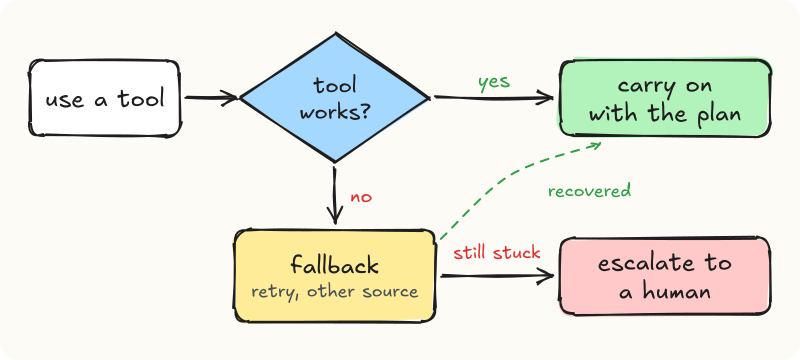
Robust agentic systems include fallback strategies for common failure scenarios:
- What to do when tools are unavailable
- How to handle incomplete or conflicting information
- Escalation procedures for complex decisions
- Recovery protocols after errors
The Iteration Loop: Continuous Improvement
Observation and Learning
Effective agentic prompts incorporate feedback mechanisms that allow the system to learn from each interaction.
This creates a continuous improvement cycle:
- Action execution and outcome observation
- Performance measurement against defined criteria
- Pattern recognition and strategy adjustment
- Knowledge base updates for future interactions
Prompt Evolution Strategy
Prompt iteration is integral to developing effective agentic systems.
The process involves:
- Baseline establishment: Start with core functionality
- Incremental refinement: Add complexity gradually
- Performance monitoring: Track success rates and failure patterns
- Systematic testing: Validate changes across diverse scenarios
Key iteration principles:
- Change one element at a time to isolate impact
- Maintain version control for prompt iterations
- Document performance changes with each modification
- Test edge cases and failure scenarios regularly
Production-Ready Template
Here’s a comprehensive template for agentic prompts based on proven frameworks:
# Agent Configuration: [Agent Name/ID]
Version: [X.X] | Created: [Date] | Owner: [Team/Individual]

## Mission Statement
[Overarching goal and purpose - 2-3 sentences maximum]

## Role
You are a [specific role] with [relevant expertise/authority level].
[Additional context about operational environment]

## Core Tasks
1. [Primary responsibility with measurable outcome]
2. [Secondary task with clear deliverable]
3. [Output formatting requirement]

## Available Tools
- [Tool 1]: [Purpose and usage guidelines]
- [Tool 2]: [Capabilities and limitations]
- [Tool N]: [Integration requirements]

## Knowledge Sources
- [Data source 1]: [Reliability level and access method]
- [Information repository]: [Update frequency and scope]

## Operational Constraints
- [Boundary 1]: [Specific limitation with examples]
- [Safety rule]: [Non-negotiable requirement]
- [Resource limit]: [Specific thresholds]

## Success Criteria
Evaluate performance against:
- [Metric 1]: [Target threshold]
- [Quality measure]: [Assessment method]

## Contingency Protocols
If [specific scenario], then [defined action]
When [error condition], escalate via [method]

## Output Format
[Exact structure specification with examples]
Best Practices for Implementation
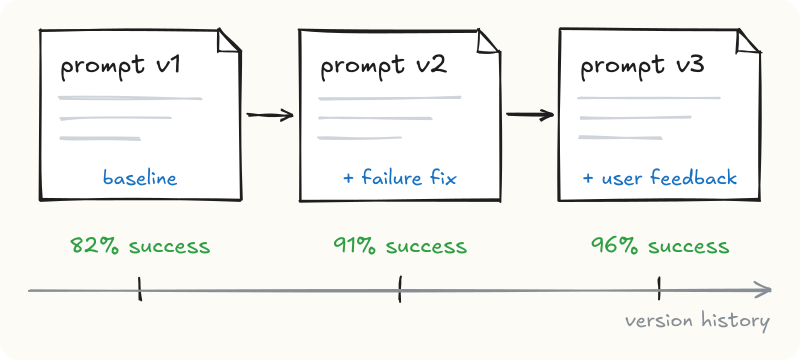
Document Everything
Maintain comprehensive documentation of prompt evolution and version history, performance metrics and trends, common failure patterns and solutions, user feedback, and system improvements.
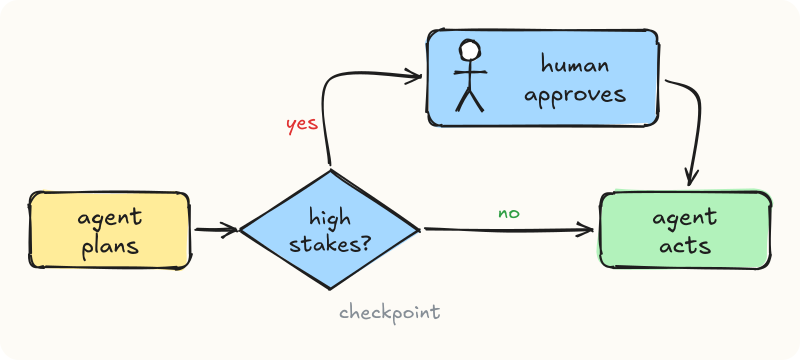
Maintain Human-in-the-Loop Checkpoints
Even autonomous systems benefit from strategic human oversight points. Define clear criteria for when human intervention is required or beneficial.
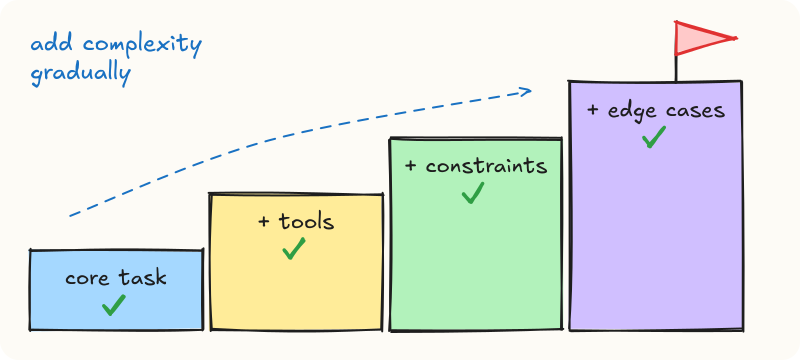
Start Simple, Scale Gradually
Begin with basic functionality and add complexity incrementally. This approach allows you to identify and resolve issues before they compound in more complex scenarios.
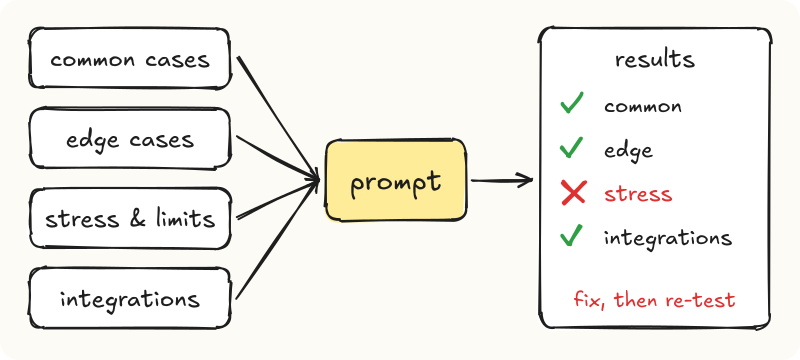
Test Across Diverse Scenarios
Validate your agentic prompts against common use cases and expected inputs, edge cases and unusual scenarios, system stress conditions and resource constraints, and integration points with other systems.
The future of AI agents lies not just in their ability to follow instructions, but in their capacity to understand context, make intelligent decisions, and adapt to changing conditions, all capabilities that stem from well-architected agentic prompts.
Keep reading
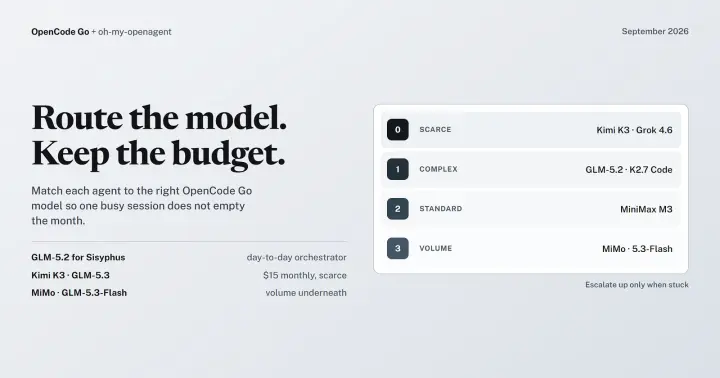
OpenCode Go + oh-my-openagent: The Complete Guide to SOTA Model Routing Without Hitting Limits! [Updated: September 2026]
A tiered guide to routing OpenCode Go models across oh-my-openagent agents, with fallback chains and budgeting to avoid hitting rate and monthly limits.
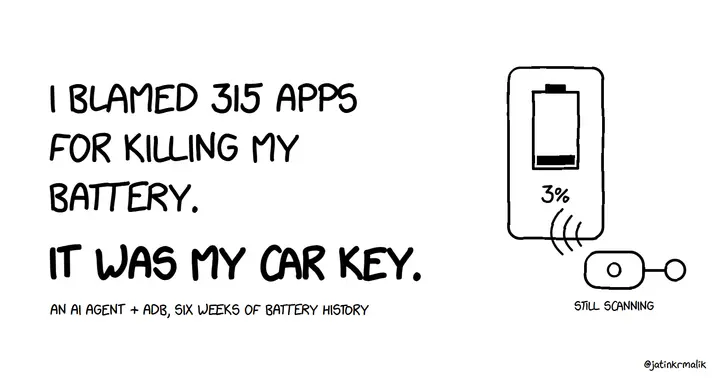
I Let an AI Agent Debug My Foldable’s Battery Over ADB. Here’s the Playbook It Followed.
60 MB of diagnostics, six weeks of battery history, and a surprise: the “bloat” from restoring my old phone wasn’t the problem.
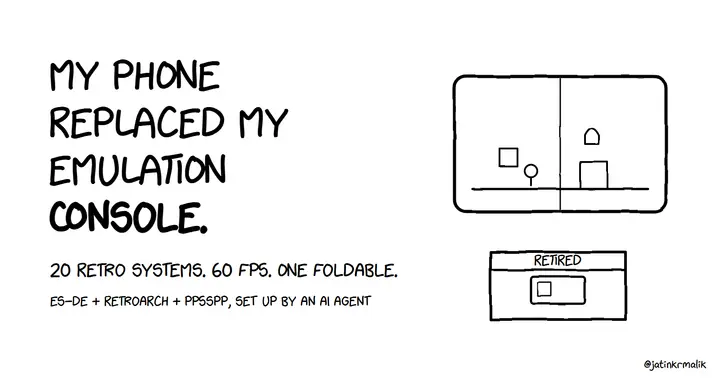
Turning a Samsung Foldable into a Retro Handheld: An AI-Agent-Run ES-DE Setup Guide
20 systems, one frontend, every one running at full speed. Here’s how an AI agent and I got there, including the parts that broke.
Comments
No comments yet. Start the conversation.
Comments couldn't load right now.