Day 14 of #DistributedDilemmas: Service discovery often becomes a SPOT (single point of failure)
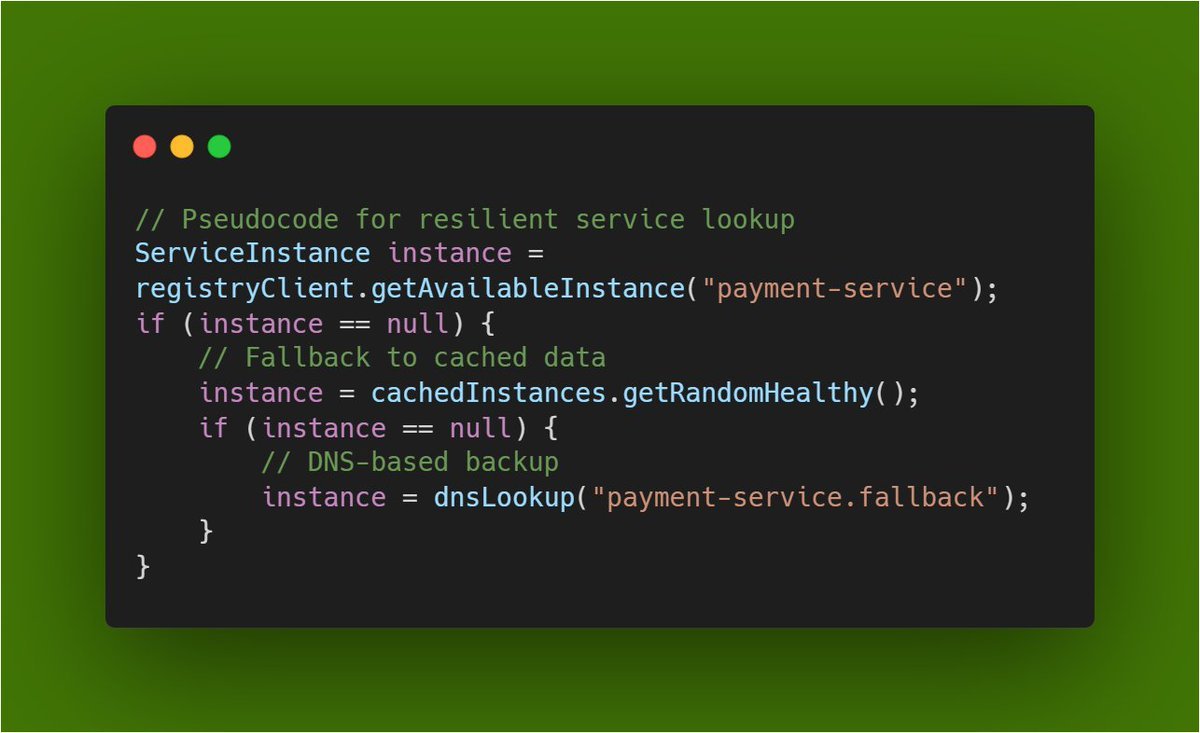
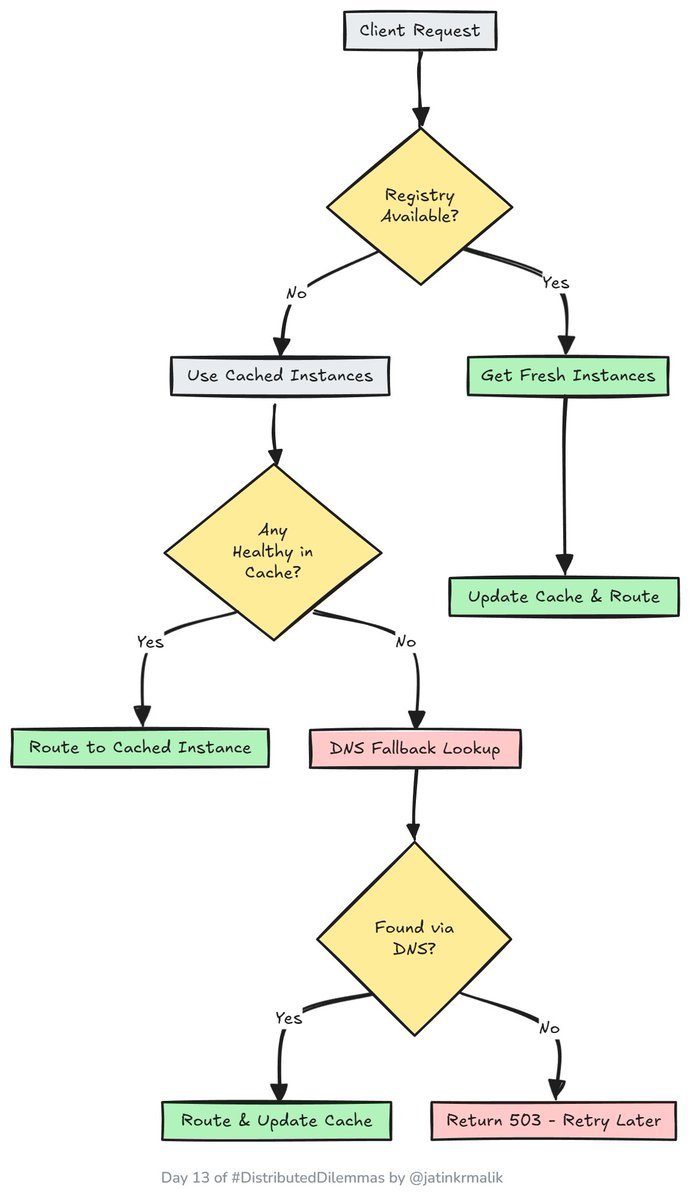
Service discovery often becomes a SPOT (single point of failure). Your registry being unavailable shouldn't prevent finding the registry. Design for…
 Jatin Kumar Malik First published on
 X
Your registry being unavailable shouldn’t prevent finding the registry. Design for graceful degradation.
Real-World Implementation Examples:
-
Airbnb’s SmartStack uses ZooKeeper for registration and local HAProxy for failover. https://medium.com/airbnb-engineering/smartstack-service-discovery-in-the-cloud-4b8a080de619#.m0x2ks9ja
-
Hashicorp Consul combines service discovery with health checking and multi-datacenter support. https://github.com/hashicorp/consul
-
AWS Cloud Map implements automatic DNS failover when registry components degrade. https://docs.aws.amazon.com/wellarchitected/latest/reliability-pillar/rel_mitigate_interaction_failure_graceful_degradation.html
By layering these techniques, systems maintain >99.95% availability even during registry outages, meeting strict SLOs for critical infrastructure.
The key is designing failure handling as a first-class feature rather than an afterthought.
Keep reading
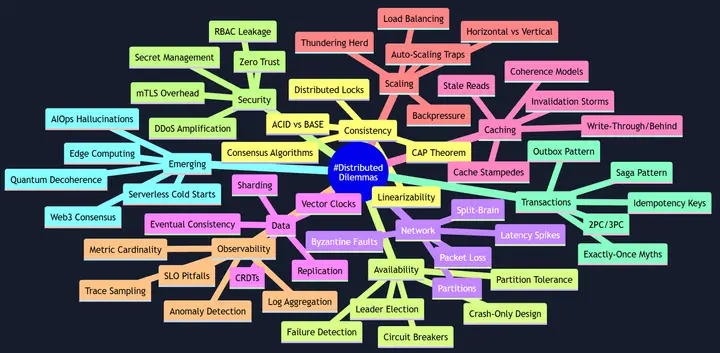
🚀 Launching today: 28 Days of #DistributedDilemmas
Follow me on Twitter/X this February for one battle-tested insight a day on the hidden complexities behind outages, tech debt and architectural nightmares.
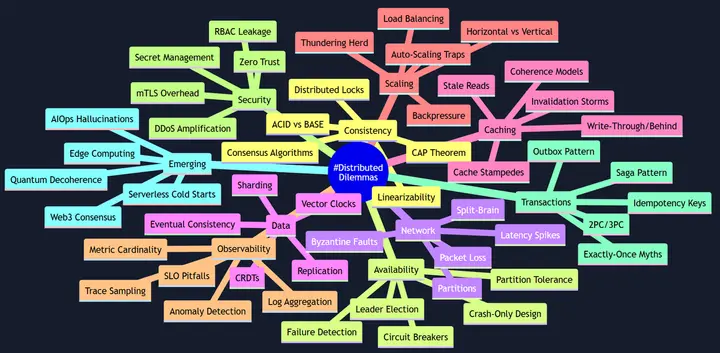
#DistributedDilemmas: all 24 days in one place
In February 2025 I posted one distributed systems dilemma a day on X. I made it to day 24. Here they all are, with the diagrams.
Cell-based architecture, explained: the public version of my Innovation Day talk
My Innovation Day deck was internal, so here's the public version: what a cell is, scaling up and across, blast radius, and what cells cost you.
Leave a comment