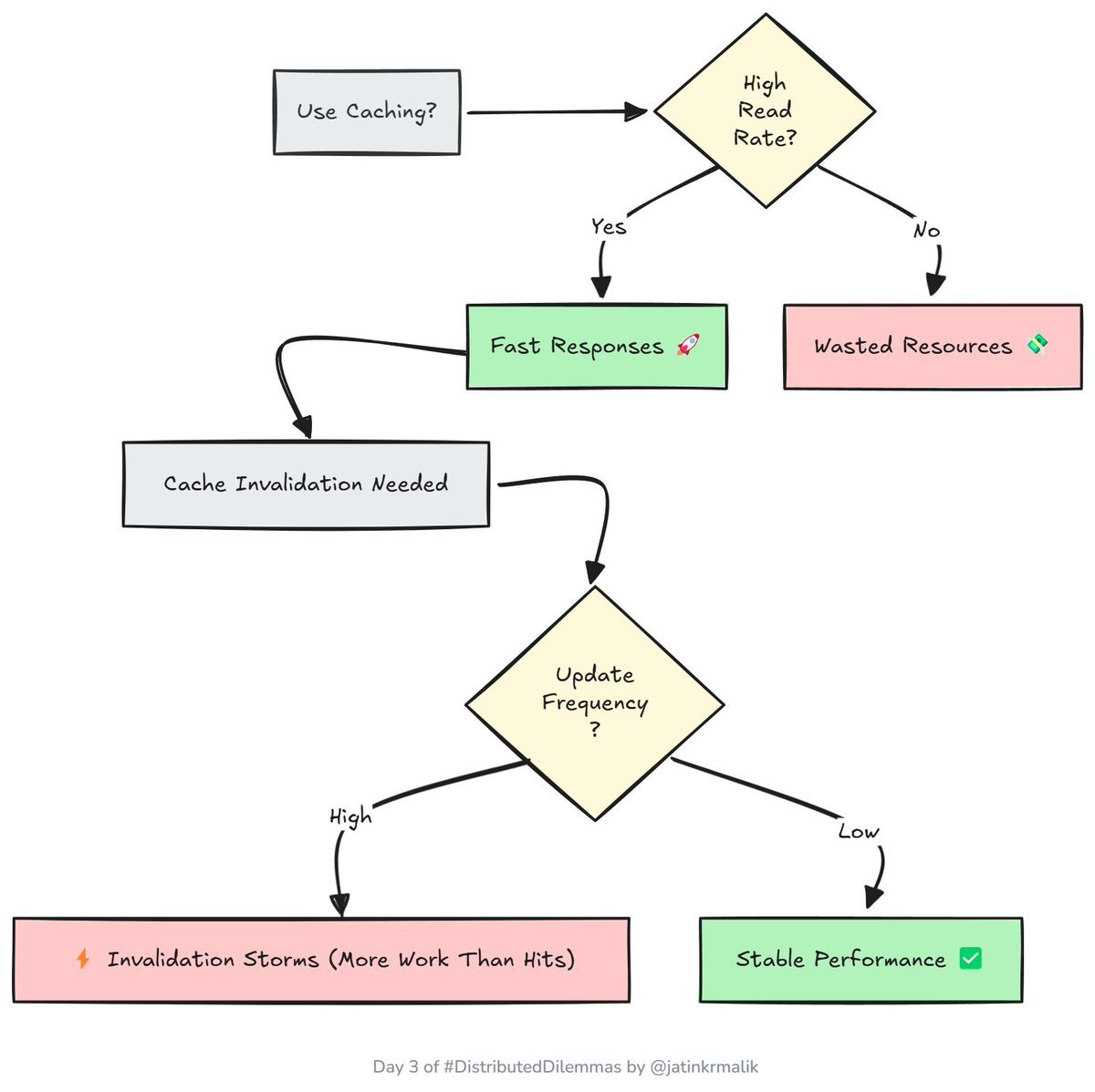
Day 3 of #DistributedDilemmas: Caching accelerates inconsistency
Caching accelerates inconsistency. Cache invalidation storms often outweigh hit rates. The fastest cache is sometimes no cache at all. Exhibit A: DoorDash…
 Jatin Kumar Malik First published on
 X
Cache invalidation storms often outweigh hit rates. The fastest cache is sometimes no cache at all.
Exhibit A: DoorDash experienced this issue in their systems. During peak hours and high load, cache misses due to expiration or server restarts led to multiple parallel duplicate reads, causing spikes in network traffic and latency. This behavior, known as cache stampeding, overwhelmed their backend systems.
Exhibit B: Percona’s blog discusses a similar phenomenon where expensive-to-generate cache items with high hit rates can cause server overload when multiple clients simultaneously attempt to recreate the item after a cache miss. This parallel processing can significantly increase response times, making the system slower than if there was no cache at all.
Keep reading
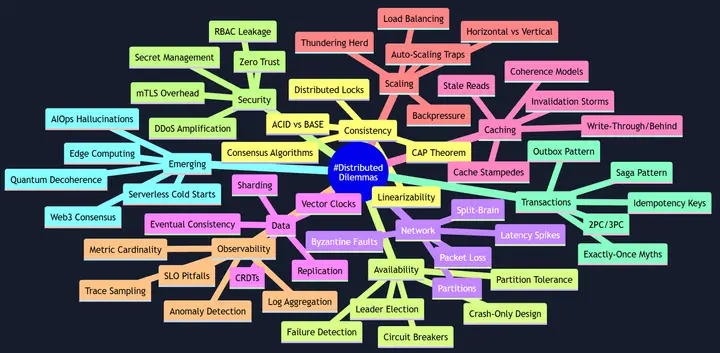
🚀 Launching today: 28 Days of #DistributedDilemmas
Follow me on Twitter/X this February for one battle-tested insight a day on the hidden complexities behind outages, tech debt and architectural nightmares.
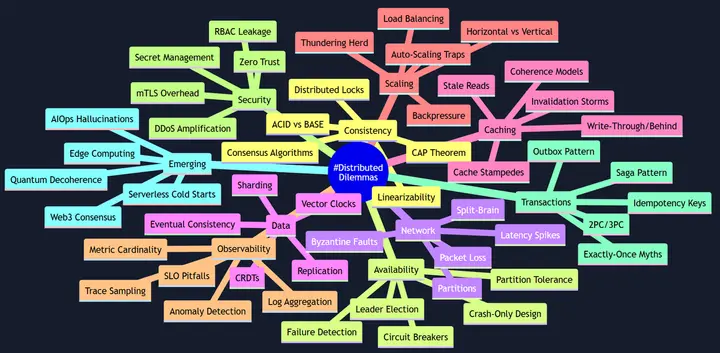
#DistributedDilemmas: all 24 days in one place
In February 2025 I posted one distributed systems dilemma a day on X. I made it to day 24. Here they all are, with the diagrams.
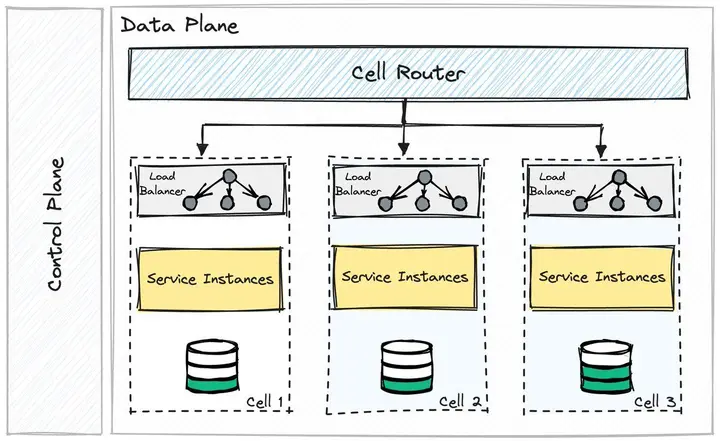
Cell-based architecture, explained: the public version of my Innovation Day talk
My Innovation Day deck was internal, so here's the public version: what a cell is, scaling up and across, blast radius, and what cells cost you.
Leave a comment