Why your agent shouldn't borrow your access: notes from Insecure Agents Podcast
I went on the Insecure Agents podcast at AGNTCon + MCPCon to talk about how Atlassian secures agent traffic. The short version, and the bits worth pressing play for.

At AGNTCon + MCPCon in San Jose, I sat down with Allie Howe on her podcast, Insecure Agents, to talk about the gateway every agent goes through to reach Jira, Confluence, Trello, Loom and the rest of Atlassian’s products. It’s episode 67, and it’s 26 minutes well spent. I’m biased, obviously.
Prefer audio? It’s on Apple Podcasts and Spotify.
Here’s the short version, and the bits worth pressing play for.
Worth pressing play for
The numbers. Close to 2 million monthly active users and 15 to 20 million tool calls a day, through MCP, A2A, the CLI and whatever protocol an agent shows up with next. None of it was planned. Every step was iterative.
Why your agent shouldn’t borrow your access. Like everyone else, we started by giving the agent the user’s access, and learnt quickly why that’s a bad idea. You bring judgement to admin and destructive tools. An agent doesn’t. As I put it on the show, “giving the same identity to the agent is always a painful thing.” Now the gateway tells user-only, hybrid and fully autonomous actions apart, and the episode gets into what happens in between.
Delete is a one-way door. Some actions just aren’t exposed through our MCP server at all. Allie had a good story about why other teams do the same.
The M by N problem. Every agent surface, times every type of action, enforced again at the org, site, product and user level. It gets complicated fast, and the good old API gateway was never built for it.
Fewer than 5% of customers. That’s how many have really cracked autonomous workflows. The episode walks through what that looks like, from a Loom recording to an item on a team’s roadmap with nobody touching it.
Trust, one layer at a time. I used to send back any PR over 10 files and 500 lines. Now a thousand lines across 20 files is a normal Tuesday. Also, my dad and eBay.
The Atlassian V2 MCP server
We closed on the Atlassian V2 MCP server, which we’d just launched. Instead of stuffing every tool definition into the agent’s context, V2 moves to a discover and execute model: a handful of the most used tools up front, and a discover tool that finds the right three to five out of 200-plus when the agent needs them. Some people at the conference loved it, some didn’t.
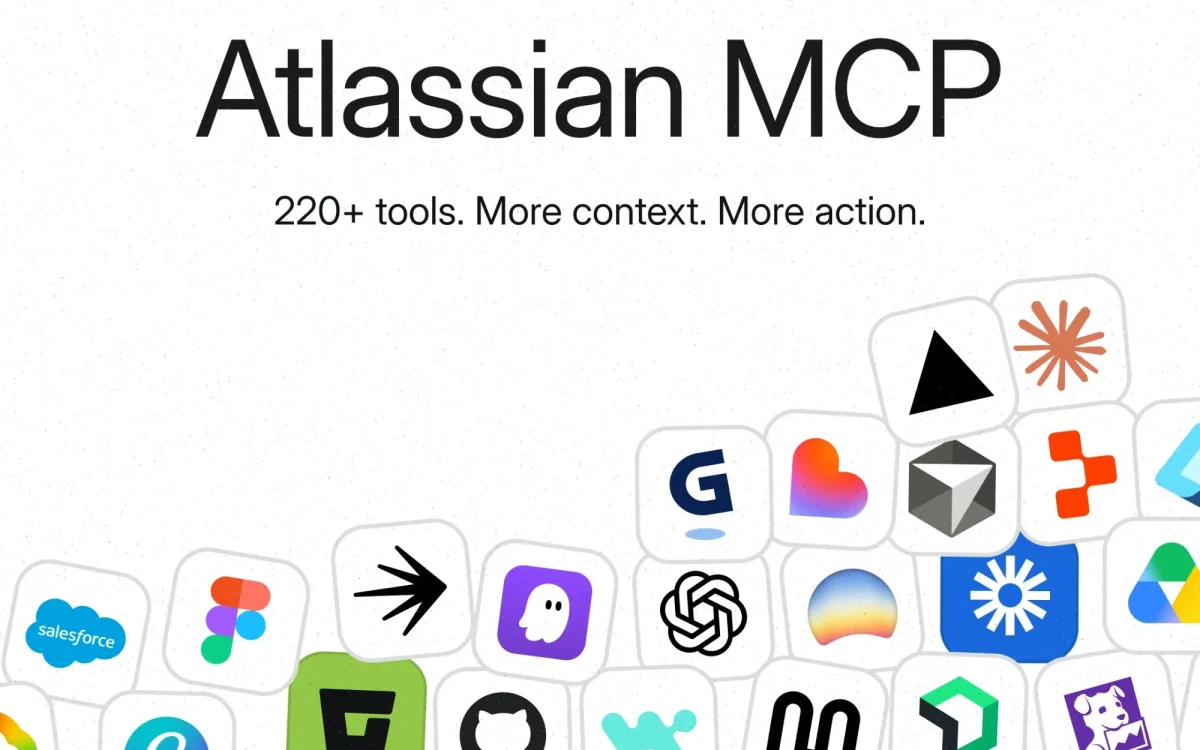
If you want to try it: get started, see the supported tools, or upgrade from v1 to v2. Developers can dig into the Atlassian Rovo MCP docs. Then tell us how it goes.
Behind the scenes
AGNTCon + MCPCon is the Agentic AI Foundation’s conference, and this year it took over the San Jose McEnery Convention Center on 22 and 23 October.


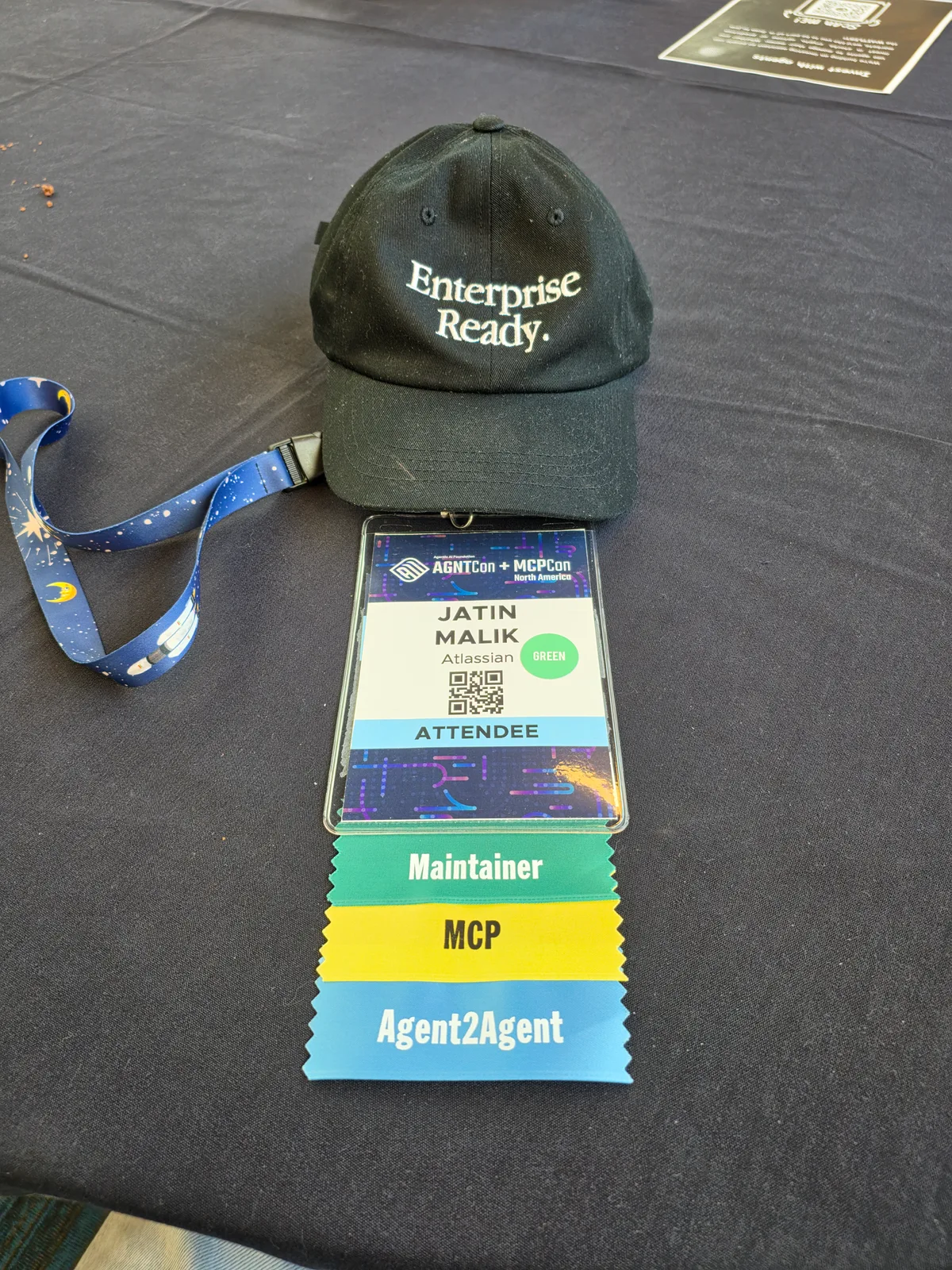
Between sessions I met a lot of interesting people and startups, and came back with a bag full of swag.

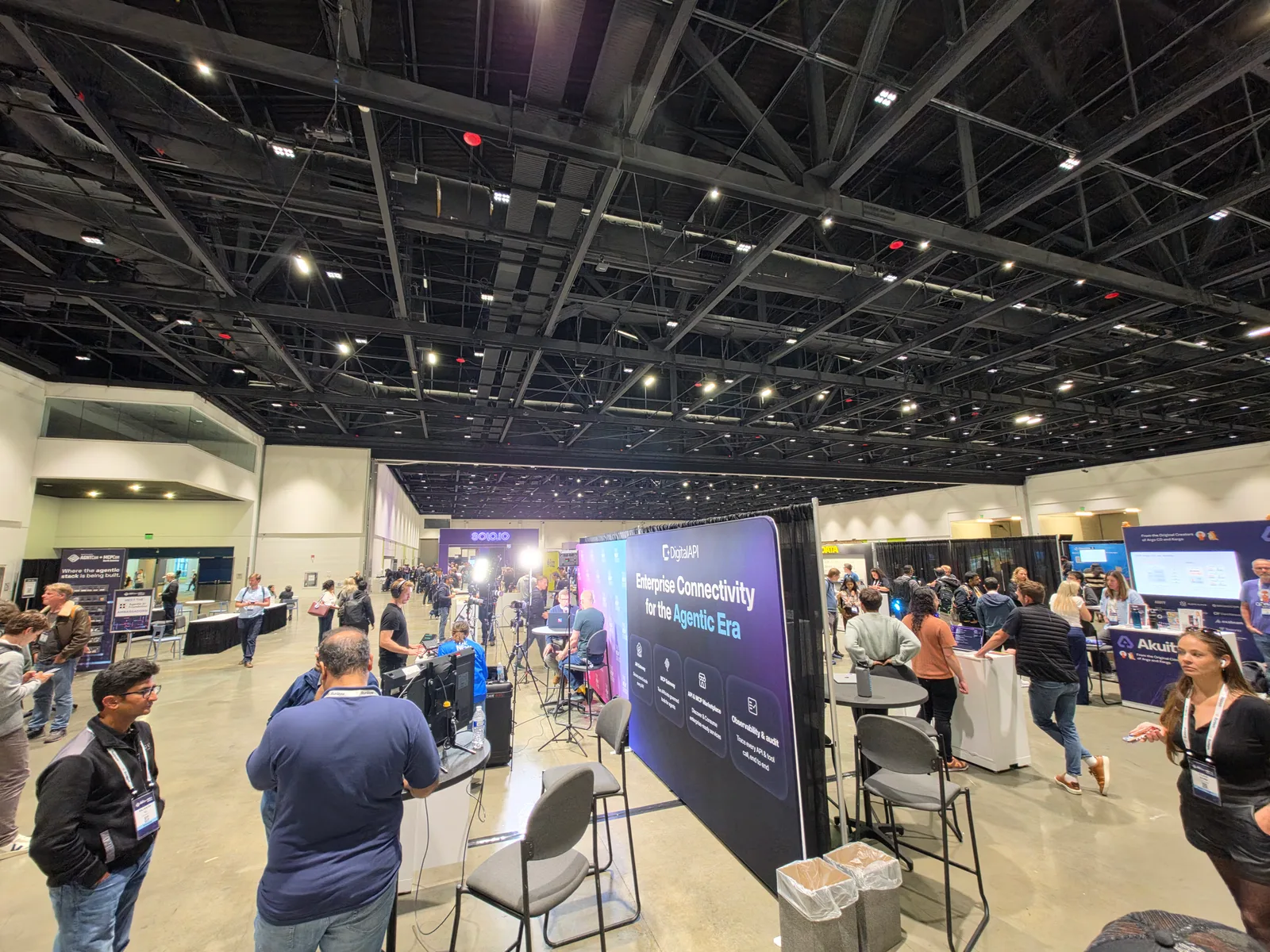
We recorded on day two, at a little set right on the show floor.
Point the camera one way: podcast. Point it the other way: the rest of the conference.
I posted about it that night:
Recorded a pod for Insecure Agents with @vtahowe at AGNTCon + MCPCon. 🎙️
Jatin K Malik (@jatinkrmalik) October 24, 2026
We talked about the protocol layer of agent identity: why identity has to ride every MCP tool call, and giving every agent a mission, a budget, and a kill switch.
Coming soon..
#AGNTCon #MCPCon pic.twitter.com/hTFQPGgaRb
Where to listen
Insecure Agents (with a full transcript), Apple Podcasts, Spotify or YouTube. Thanks to Allie for having me.
Keep reading
Building cross-distro offline voice dictation for Linux (and why it took more than a model)
The story behind Vocalinux, from the missing Linux dictation gap to whisper.cpp, remote HTTP STT, Wayland text injection, and a tray app you can use every day.
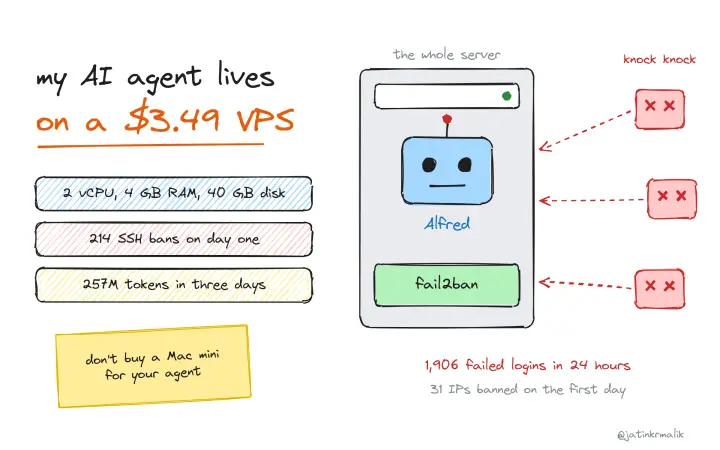
My AI agent lives on a $3.49 VPS, and the internet keeps knocking
I skipped the Mac mini and put Clawdbot (now OpenClaw) on a $3.49 Hetzner VPS. Bots found it within hours. My hardening list, token bill and Alfred.

How I Built a Privacy-First Offline Speech-to-Text Tool That I Use Every Single Day
Introducing Vocalinux, an open-source, 100% offline voice dictation tool for Linux using Whisper or VOSK, with its architecture, features and install guide.
Comments
No comments yet. Start the conversation.
Comments couldn't load right now.